What Actually Stays
Published September 28, 2026 · Confectionally Yours Journal

Burns were tuition
Every confectioner I have known carried marks. Scars on forearms from kettle rims. Smooth, pale patches on the backs of hands where sugar found skin and stayed long enough to teach a lesson. You learn the heat not from a thermometer but from the moment it finds you—and if you stay in the trade long enough, it always finds you. Burns were not accidents. They were tuition.
We cooked hard candy to about 320 degrees. At that temperature, sugar is not a food—it is a liquid that wants to become glass. It moves like water but holds heat the way metal does, and when it touches cooler skin, it does two things almost simultaneously: it burns, and it hardens. You cannot wipe it off. You cannot peel it away without tearing what’s underneath. The only remedy is cold running water, holding still while the candy slowly dissolves, which, depending on the size of the spill, can take a very long time. You stand at the sink and wait. The work waits with you.
The spatula at North Highlands
One afternoon at the factory in North Highlands, I was working with a small team. We had poured a batch onto the steel candy table, and I reamed the kettle with a spatula, then set the blade into the hot candy with the handle resting just over the edge. I set the kettle down, went back to the table, and bumped the spatula. The hard candy splattered across the underside of my arm—a large area, soft skin, not the kind of surface that had been seasoned by years of small burns the way the tops of my hands had.
I went to the sink. I ran the water. I waited. When I had recovered, I went back to work and finished the day. This is what you did. The burn was not a crisis. It was Tuesday.
What it left behind was a water blister—large, tender, and in exactly the wrong place.
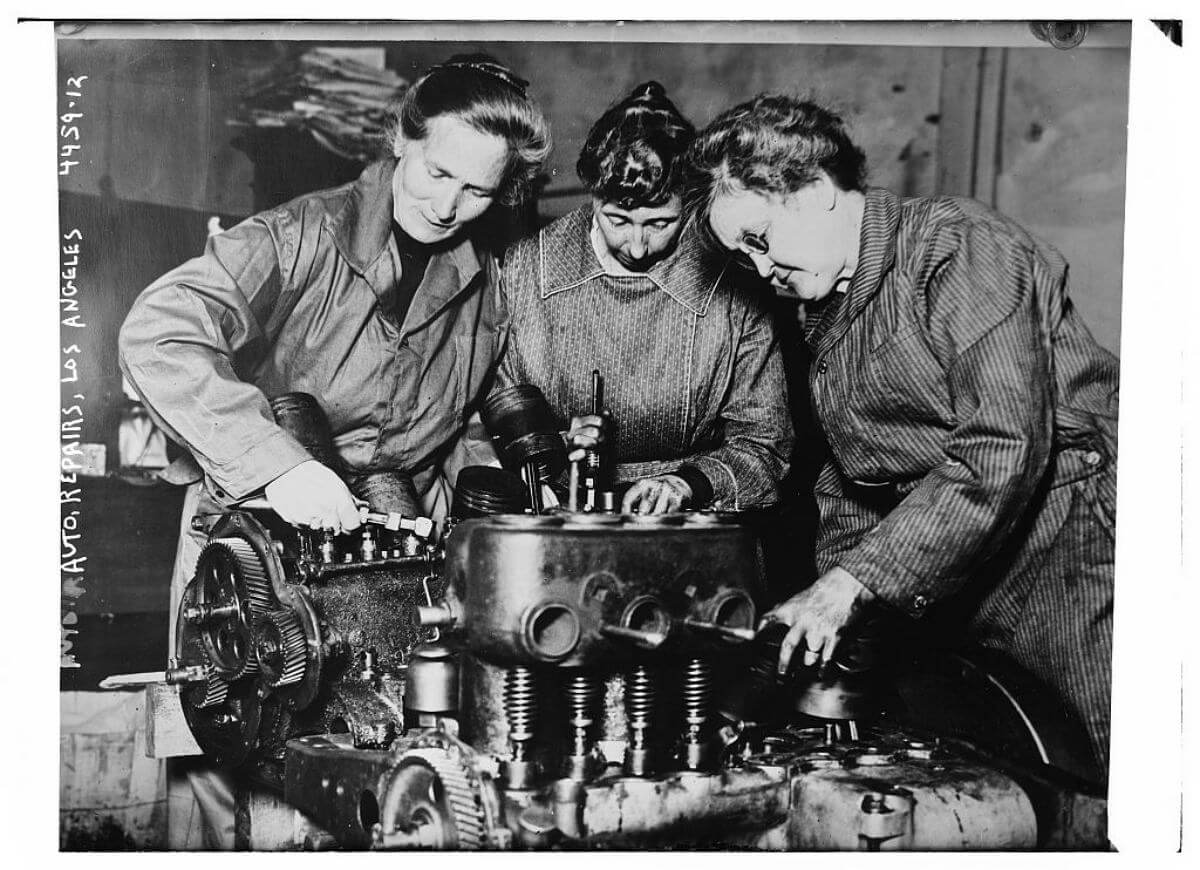
“The Habit of Fixing Things”
What Lingers — August. A leak, a lamp, a recipe: the things worth continuing, and where the habit of keeping them came from.
Read the EssayThe boxing match in the kitchen
My children and I had a habit. We wrestled. We play-boxed. It was how we greeted each other—a hug first, then the friendly banter, fists up, everybody dancing around the kitchen while the dogs circled and barked. It was theater, not combat. Everyone knew the rules.
That evening it was just my daughter and me at home, plus our furry entourage. She was about thirteen. She welcomed me with a hug, and then the boxing began. She threw a gentle punch, I lifted my arms to block, and she landed—with impeccable accuracy—directly on the blister.
It popped.
Mostly on her face.
What followed was not calm. She danced through the house in a state of mild, magnificent horror, the dog running circles beside her in solidarity, both of them performing a kind of choreography that no one had rehearsed. She was not hurt—not in any way—but the shock of someone else’s body deciding to involve her in its healing process was, understandably, too much for a thirteen-year-old to absorb with grace.
I calmed her down. I helped her clean up. We laughed about it later. Her two brothers, once they heard, did not let her forget it. They still have not let her forget it.
What I meant to pass on
I have spent the better part of a year writing about legacy. About craft knowledge and who carries it forward. About recipes preserved and techniques recovered and the quiet, serious work of making sure that what mattered to one generation is not lost to the next. I have written about masters and mentors, about the Depression-era candy makers who saved everything, about hands that taught without speaking. I meant every word.
But here is what I did not expect to discover: when my children gather—at holidays, over the phone, in the easy shorthand of people who grew up in the same kitchen—they do not talk about tempering curves or sugar stages. They do not quote the lessons I tried so carefully to pass along about patience, craft, or doing the work even when it burns.
They tell the blister story.
Every time. With the same delight they had the first time her brothers heard it. With embellishments that have grown more dramatic with each passing year. With the dog’s role elevated to something approaching heroic. It is, by a wide margin, the single piece of my working life that has been most faithfully preserved, most joyfully transmitted, and most reliably carried forward by the next generation.
The lesson that outlasted the lessons
I have been asking, in these letters, what lingers. I thought the answer would be serious—and sometimes it is. But I am learning that what stays is not always what we intended to leave behind. Sometimes it is the ridiculous, icky, perfectly human moment that nobody planned and everyone remembers. The lesson that outlasted all my careful lessons was this: don’t punch your Dad when he has a large blister on his arm.
She never did again. But the story—the story she has never stopped telling.
Confectionally Yours,
Emery

Nostalgic Confections
Keep the good things going
Confectionally Yours Journal is where the craft is kept — essays on confectionery history, archive photographs with their provenance intact, and the working knowledge that lived in people’s hands.
Visit the JournalNo ads. No products. Just the work, shared.
Researched, written, and curated in collaboration with AI tools. Human selection, historical interpretation, creative judgment, and final authorship remain central to the work. AI Disclosure
The Palimpsest is the essay room of Confectionally Yours Journal — longer reflections on confectionery craft, lived memory, and the knowledge that lived in people’s hands.