
Just a Spoonful
Published September 14, 2026 · Confectionally Yours Journal
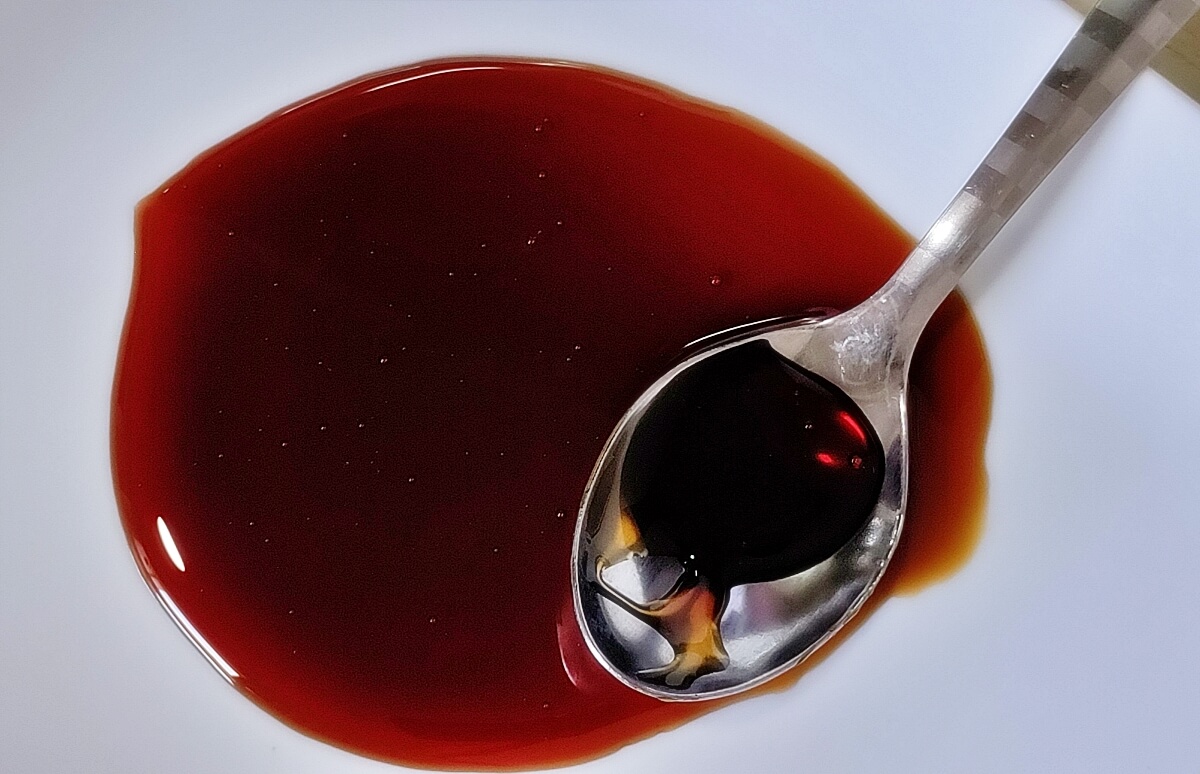
The first thing I ever learned about lecithin was that a grown man would drink it on purpose.
“Would you like a spoonful of lecithin? It cures all ailments.”
— Tom Hammond, grinning. As best I can render him, fifty years on.
The Spoon
I was seventeen and the sugar was going up. Tom had seen it coming and contracted ahead of the move, which made him right, and being right meant every hundred-pound bag on that contract was going to arrive whether we had room for it or not. We had room the way you have room in a closet. My job was to make the room. Floor to ceiling, one bag at a time, for as long as it took to consume the contract.
Somewhere in the middle of that, I watched him take a tablespoon of something out of a jar. Thick, brown, slow off the spoon. He caught me looking and offered me one, with a grin that told me he knew exactly what he was offering and exactly what I was going to say.
I had opinions at that age about what belonged in my body. I declined politely.
It came up again a few years later, when I was working alongside the candy makers and learning the craft for real, and my answer had not improved. Tom passed, and the offer stopped, and the strange thing is that it never quite did. Every time I opened a pail of lecithin after that — and I opened a great many — Julie Andrews started up in the back of my head about a spoonful of sugar, and I said no thank you to a man who was no longer asking.
I still do.
What It Actually Is
Lecithin is not one molecule. It is a commercial mixture rich in phospholipids, which are fat-like compounds built with a water-attracting end and an oil-attracting end on the same structure. That split personality is the whole trick. It is what lets one substance stand between two things that would otherwise refuse each other.
Soy has been the dominant commercial source for a long time, but lecithin also comes from sunflower, canola, corn, and egg. In the pail it is amber to dark brown and glossy. Deoiled, it arrives as a pale yellow granule or powder, which is easier to handle and considerably less memorable.
What It Does
A binder of sugars and fats
That is how we said it on the floor, and it is close enough to be useful. The textbook version is that an emulsifier holds oil and water together. In chocolate, though, that description points slightly away from what is actually happening. Chocolate is not an oil-and-water system. It is a great many fine solid particles — sugar, cocoa, milk solids — suspended in fat. Lecithin coats those particles and keeps them from grinding against one another. What you buy with it is flow.
Why flow is worth buying
A chocolate mass has to travel. It moves through refiners and conches, gets pumped, sits in a tank, runs an enrober, drops out of a depositor, fills a mold and releases clean. Every one of those steps has an opinion about viscosity. You can buy flow with more cocoa butter, which works and costs money and changes the eating quality, or you can buy a good deal of it with a very small amount of lecithin.
And in toffee
This is the part I can speak to without looking anything up. You cannot make a toffee the way Hammond’s made toffee without lecithin. High butterfat, cooked hard, and the whole question of the batch is whether the butter stays married to the sugar or walks out of it. Lecithin is what draws the butter in while the batch cooks. Without it you are standing over a kettle watching a separation you cannot argue with.
The Numbers
Hammond’s Almond Butter Toffee ran an ingredient deck of almonds, sugar, butter, milk chocolate, sea salt, and soy lecithin. Of those six, the lecithin was the one people wrote letters about.
Toffee took more emulsifier than anything else we made, and in a finished hundred-pound batch the lecithin came to 0.198 percent. That is a little over three ounces. Three ounces in a hundred pounds, doing the work that decides whether you have toffee or a mess.
It is also not a lever you can lean on. Past a certain dose the viscosity benefit flattens out and you start buying things you did not want — stickiness, a harder set, and eventually a dull fatty note where there should be butter and almond. More is not better. More is a different problem.
Why It Draws Fire
Three ounces in a hundred pounds, and I took more heat for that line on the deck than for anything else in the case. Consumers, and a fair number of my friends in dietetics, treated it as evidence of something.
I have never entirely understood the selection. Lecithin is a highly processed material extracted from a bean. So is the oil in half the kitchen. Pectin is extracted. Gelatin is rendered. None of those get the letters. Say soy and something happens that has very little to do with the ingredient and a great deal to do with what the word has come to stand for — genetic modification, industrial agriculture, a factory somewhere making food that a person did not.
Some of it is the word itself. “Lecithin” sounds synthesized. It sits on labels next to things that genuinely are. And in fine chocolate there is now an ideal of purity — beans, cocoa butter, sugar, nothing else — against which any fourth ingredient reads as a compromise the maker made for money.
The regulatory picture gets flattened in the same direction. Lecithin holds GRAS status, Generally Recognized As Safe, which is a safety determination for specified uses and nothing more. It is not a certification of anything, and it is certainly not a blessing. Meanwhile the FDA does not formally define “natural” at all, for lecithin or for anything else, which means the argument people are having about whether it counts is an argument without an official scorekeeper.
The Allergen Question
This one deserves care rather than a position. Soy lecithin is not soy protein, and the refined product carries only trace protein. Most soy-allergic people tolerate it. But traces can be present, and those traces can include allergenic proteins. That is precisely why soy source labeling is generally required rather than waived.
So the honest formulation is the narrow one. It is usually fine and it is not automatically fine, and a person with a serious soy allergy should read the label and talk to their clinician rather than take my word or anyone else’s. Neither alarm nor dismissal is warranted, and both are common.
Sunflower, and the Organic Line
There is an alternative, and it has been available for years. Sunflower lecithin does the same jobs — emulsification, flow — and it sidesteps soy entirely, which removes the soy allergen declaration for the lecithin itself and the word that starts the argument. Certified organic sunflower lecithin exists in liquid and de-oiled forms.
One caution, because the marketing blurs it: sunflower-derived is not the same as organic. Non-GMO is not the same as organic. Organic means certified organic, verified as such, with the finished product’s compliance verified separately. Those are three different claims and they get printed as though they were one.
And here is what I cannot get past. Same function, same processing, different source, and one of them gets letters while the other gets a health-food shelf. Nothing about the chemistry changed. It is discrimination, if you ask me.
Working With It
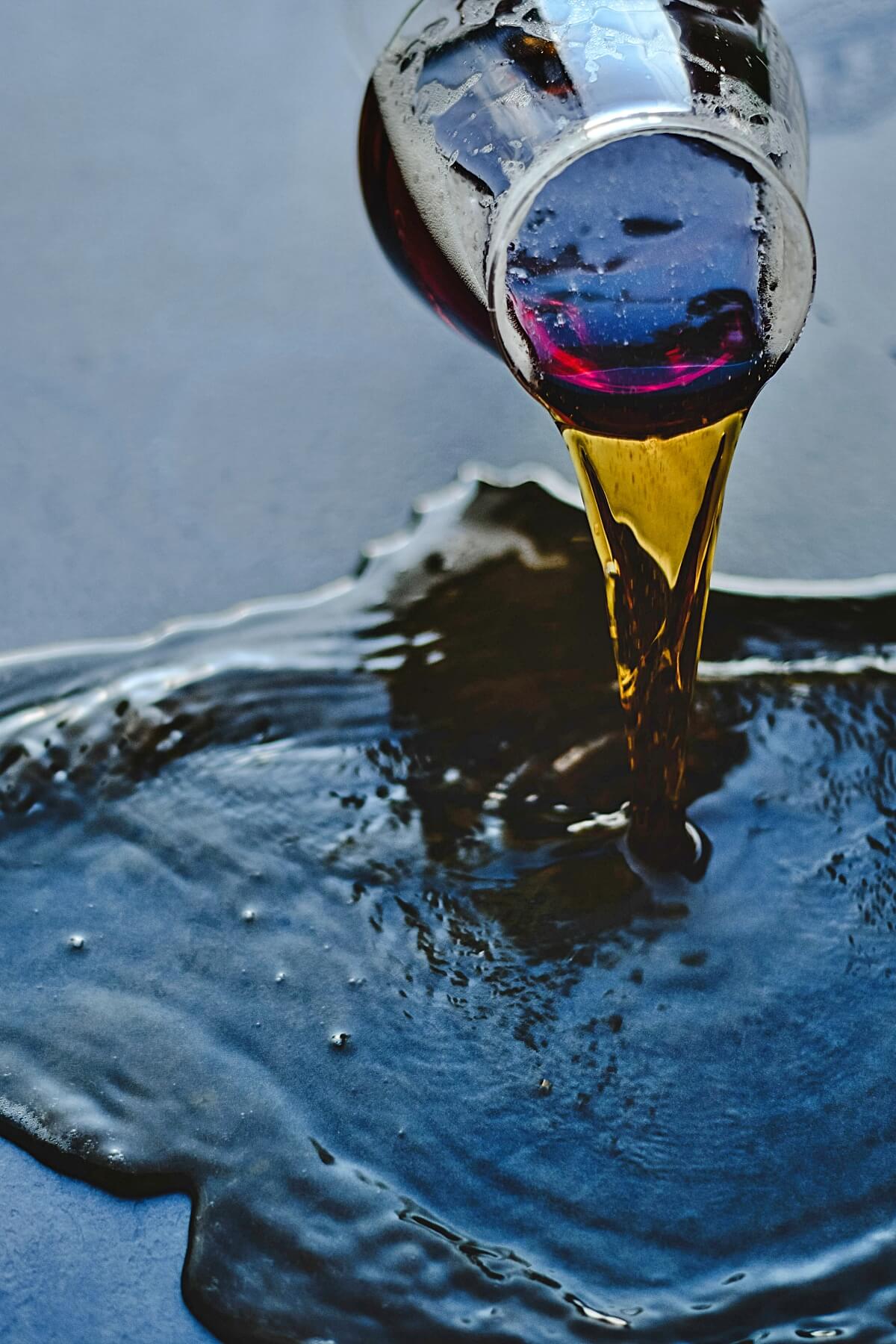
Nothing about handling lecithin will make you like it. It looks like motor oil. It moves like motor oil. It comes off the spoon in a thread that will not break when you want it to and will not stop when you have had enough. It gets on the pail, the scale, the sleeve of whatever you are wearing, and it does not rinse. Hot water and detergent and some determination, and you still find a tacky spot on the drum an hour later.
Sequence matters more than technique. Into chocolate it goes late, once the mass is warm and moving, and it goes in against a scale rather than by eye — a three-ounce error in a hundred pounds is the entire dose. Into a caramel it goes early enough to be part of the cook, drawing the butter in as the batch tightens rather than trying to rescue a separation that has already started. It is a preventive ingredient. It is very poor at repair.
And it belongs to the pail, not the plate. Raw, it is faintly beany, a little nutty, oily on the finish, and thoroughly unappetizing. At working dose in a finished confection it should be beneath the cocoa and the dairy and the butter, unnoticeable. If you can taste it, something is wrong — too much, a poor grade, or a lot that has turned.
Storage
Cool, dark, sealed, and used in reasonable rotation. Oxidation is the real enemy. A good lot smells mild — faint soybean, faint cereal, not much of anything. A lot that has gone sharp, rancid, or oddly paint-like has turned, and it will carry that note into the batch where it will read as a dull fatty flatness under everything else. At three ounces per hundred pounds you would think it could not, but it can. That is the whole lesson of the ingredient in one sentence.
The Tonic
One thing I did not know at seventeen, and would not have cared about if I had: Tom was not inventing anything. Lecithin was sold for decades as a daily tonic, and there was a real nutritional idea underneath it. It is a source of choline, which is an essential nutrient, genuinely used by the body. The trouble was everything built on top of that — memory, nerves, circulation, cholesterol, the general promise of a spoonful against everything. Those claims ran well out ahead of the evidence and have mostly stayed there.
So he was half right, which for a tonic is a better record than most. And he was entirely right about the other thing, the part he probably did not think of as a claim at all. The stuff does hold a batch of toffee together, which, as ailments cured go, was the one that mattered on that floor.
“Three ounces in a hundred pounds. Nobody ever thanked it, and nobody ever made the toffee without it.”
— Emery Dorsey
A note on the photographs
The photographs accompanying this piece are illustrative rather than documentary. They were selected for the qualities they show — color, viscosity, the way a thick liquid leaves a spoon — and none of them depicts lecithin itself. Photographs by Shahubar Ma and Eva Bronzini, via Pexels. From Pixabay, nishimura1123m.
Researched, written, and curated in collaboration with AI tools. Human selection, historical interpretation, creative judgment, and final authorship remain central to the work. How this is made →.
Nostalgic Nibbles is the working room of Confectionally Yours Journal — recipes, ingredients, techniques, and the practical knowledge that lived on the floor rather than in a book.